
John’s Substack
September 22, 2024
Why Most Managers Underperform: Lessons from the 10x Podcast
How Customer Success Drives Differentiation in Venture Capital
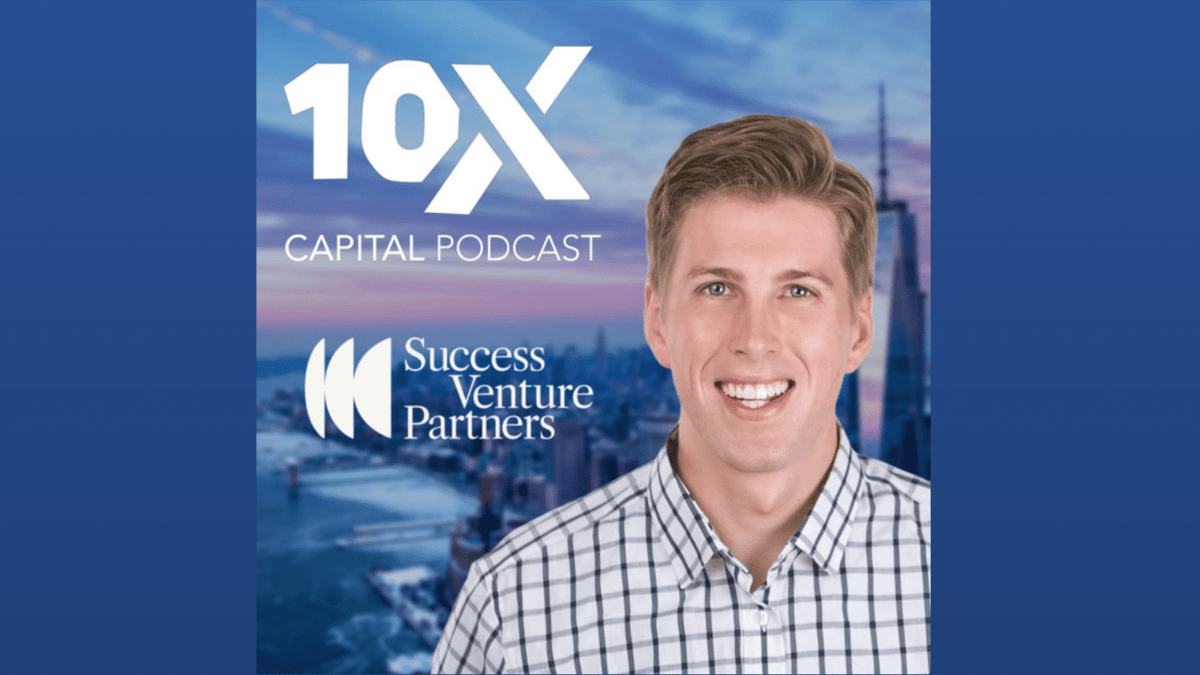
Recently, I had the privilege of being featured on the 10x podcast with David Weisburd, the fastest-growing finance podcast on Spotify. It was a milestone for me and the 75+ LPs of Success Venture Partners (SuccessVP), many of whom are among the best Chief Customer Officers (CCOs) and VPs of Customer Success in the world. I was especially proud to be the first emerging manager ever featured on the show. David titled the episode “Why Most Managers Underperform,” which struck a chord because it highlights a critical issue in venture capital: the lack of true differentiation.
At SuccessVP, we’ve built our entire thesis around being differentiated—with Customer Success as the key focus—and I was excited to explore what sets us apart during the conversation.
You should definitely give the episode a listen, but for those who prefer to read, here are a few of my favorite moments from the conversation.
Why Customer Success is Key to Product-Market Fit
One of the core principles we touched on was Customer Success, and how it became foundational to my investment philosophy. I found my way into investing through friends in venture while leading Customer Success at Motive, where I scaled the company from $1 million to $300 million in ARR. During that time, I became the “go-to” person for many of my venture friends who had portfolio companies facing high churn.
These conversations would often start with, “We’ve got a company that was doing really well, but they’ve hit high churn. We think they have a Customer Success problem.”
As I got on calls with these founders, I quickly realized it wasn’t a Customer Success problem at all. It was a product-market fit problem. These companies had raised significant rounds of funding, and in doing so, many of the founders had unintentionally drifted away from their customers.
In a rapidly shifting market, where businesses were reducing spend on non-essential software, these companies found themselves at the bottom of the priority list. They were no longer viewed as must-haves and had to go back to basics to pull themselves back into product-market fit.
What was clear to me then, and remains true now, is that staying close to your customers at every stage of growth is essential. No matter how much money you’ve raised or how impressive your sales numbers are, losing touch with your customers puts your product-market fit at risk.
The Power of Founder-Led Customer Success
Another key takeaway from the podcast was a topic I’m deeply passionate about: founder-led Customer Success. In the startup world, there’s a widely accepted notion that founders should be responsible for the first million dollars in sales. This is known as founder-led sales, and it’s crucial because it forces founders to learn directly from customers, understand their pain points, and build their go-to-market strategy.
But I think we’ve overemphasized this concept. It’s not the sale that locks in product-market fit—it’s Customer Success.
So what does founder-led Customer Success look like? It’s when founders work hand-in-hand with their early customers, learning how to onboard them successfully, capture additional revenue, and—most importantly—deliver on the promises made during the sale. The moment of truth for product-market fit comes when the customer renews for the first time. That’s when the customer says, “You promised me something, and you delivered on it.” That’s the ultimate validation.
In the early stages of a company, Customer Success starts the entire go-to-market flywheel. Think about it: Unless customer one is wildly successful, you won’t get the reference you need to convince customer two. You don’t get customer two unless you first two customers are willing do do case studies. The chain reaction begins with those early customers becoming your blog posts, case studies, and website logos — they create the social proof for scaling your business. None of this happens without a relentless focus on Customer Success from the founder.
Steve Blank vs. Steve Jobs? They’re More Similar Than You Think
One of my favorite questions on the podcast was when David asked me if I aligned more with the Steve Blank school of thinking or the Steve Jobs school of thinking when it comes to building startups.
Steve Blank, of course, is known for his Lean Startup methodology—testing, iterating, and learning your way to success. On the other hand, Steve Jobs is often celebrated as the visionary founder who brought entirely new concepts to life, like the iPad, through sheer imagination. While it may seem like these two philosophies are at odds, I actually believe they’re more alike than people realize.
If you go back to Apple’s 1977 marketing philosophy, their first principle was: We will truly understand their needs better than any other company. That’s an incredibly customer-centric philosophy, and it ties into something both Jobs and Blank believed in: knowing your customer deeply.
Steve Jobs was famous for spending hours observing customers in the Palo Alto Apple Store, learning from their behavior, and using those insights to shape his products. In that way, both Jobs and Blank share the belief that knowing your customer deeply is the key to success.
From an investing perspective, I believe the founders who prioritize Customer Success—who are constantly learning and evolving to make their customers wildly successful—are the ones that create extraordinary enterprise value. Having a bold vision is crucial, but the only way to bring that vision to life is by knowing the people that vision is meant to serve.
Final Thoughts
Being on the 10x podcast was an incredible opportunity to share what makes SuccessVP different. The next generation of venture capital and company building will be defined by Customer Success. Companies that stay close to their customers, iterate based on real feedback, and prioritize delivering value will outlast and outperform those that don’t.
At SuccessVP, we’ve built our entire thesis around this idea, and I’m excited to invest in founders who are obsessed with their customers.
Like
Comments (0)
Popular

Dive in
Related
Blog
Unlocking the Power of Community at SaaStr: Lessons from the First-Ever CCO Summit
Sep 18th, 2024 • Views 141
Blog
Unlocking the Power of Community at SaaStr: Lessons from the First-Ever CCO Summit
Sep 18th, 2024 • Views 141